|
|
         |
|
|
 |
 
|
|
| |
|
|
| |
|

We had an open topic this season. Our only guidelines were that submissions be nonfiction with a minimum of 200 words, and a maximum of 1,000 words.
|
| |
|
THANK YOU TO OUR CONTEST SPONSOR:
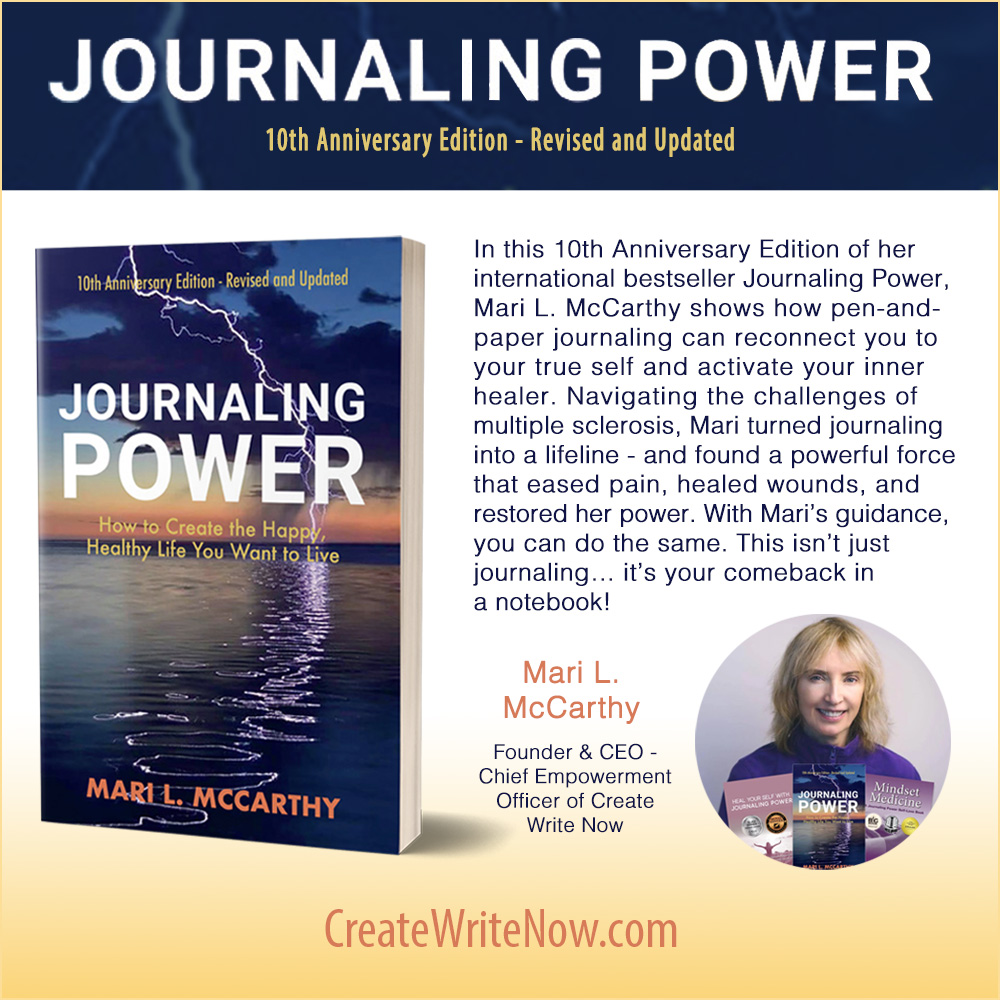
It is the sincere desire of our sponsor that each writer will keep her focus and never give up. Mari L. McCarthy has kindly donated a prize to each winning contestant. All the items in her shop are inspiring and can help you reach your writing goals. Write on!
|
| |
|
Note to Contestants:
We want to thank each and every one of you for sharing your wonderful essays with our judges this season. We know it takes a lot to hit the send button! While we’d love to give every contestant a prize, just for your writing efforts, that wouldn’t be much of a competition. One of the hardest things we do after a contest ends is to confirm that someone didn’t place in the winners’ circle. But, believe it when we say that every one of you is a true winner for participating.
To recap our current process, we have a roundtable of 12+ judges who score equally formatted submissions based on: Subject, Content, and Technical. If a contestant scores well on the first round, she receives an e-mail notification that she passed the initial judging phase. The second round judging averages out scores and narrows down the top 20 entries. From this point, our final judges help to determine the First, Second, and Third Place Winners, followed by the Runners Up.
As with any contest, judging so many talented writers is not a simple process. With blind judging, all contestants start from the same point, no matter the skill level, experience, or writing credentials. It’s the writer’s essay and voice that shines through, along with the originality, powerful and clear writing, and the writer’s heart.
Thank you for entering and congratulations to all!
 Now on to the winners!
Drum roll please....

1st Place: C.L. Olsen
Lake Erie, Michigan
Congratulations, C.L.!
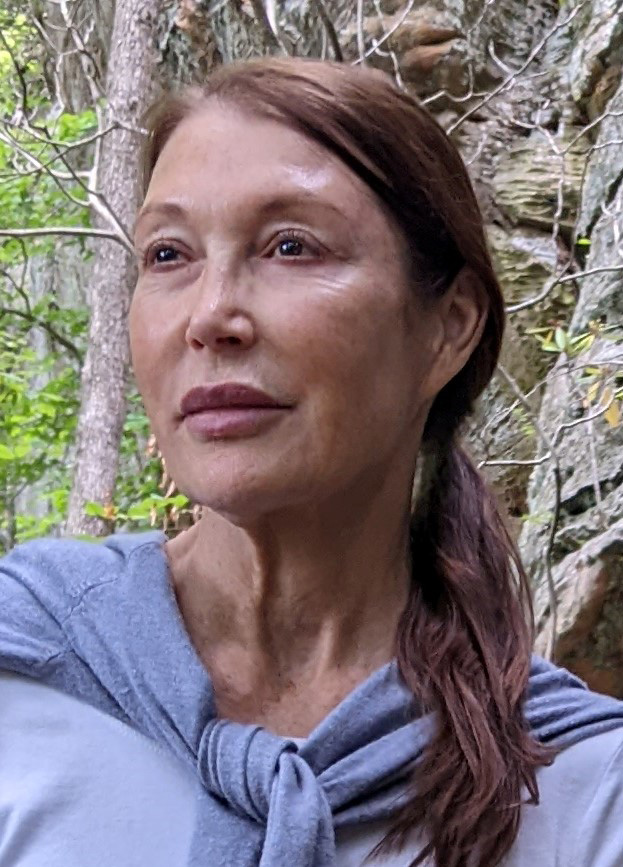
C.L.’s Bio: C. L. Olsen is the author of the memoir The Home for Friendless Children and two children's books featuring an old crabby sea turtle. She lives in a little white cottage on the shores of Lake Erie in Michigan with her husband and five ornery ducks.
Printable View
Drifted
By C.L. Olsen
Long after I found her, she began to return to me in fragments. Not the sirens, the police, the boat, the reporters, or the Chaplain who came by after. Only her. Dark boots. A tiny bit of bright pink. A shape where no shape should be. Slowly drifting past silently among the small icebergs dotting the still-frozen lake. Broken slabs, jagged and uneven, rising out of the dark water like the backs of something ancient, carrying her along.
Your mind tries to make it into driftwood, into a trick of light, into anything else. The details come slowly, unwillingly. Legs. A shoulder. A face. Some kind of tattoo across her torso. Hair clinging to the surface, fanning slightly with the water’s breath. The lake keeps its quiet, steady flow. The ice drifts. Nothing marks the moment except that. Just a quiet, unsettling wrongness.
Maybe it’s just one of those blow-up dolls left over from a bachelor party that made its way into the lake? Oh, please let it be. I adjust the binoculars and look again. Grabbing my phone, I pull on boots and a raincoat and head down to the beach. It’s so quiet, no one is out on this cold, eerie, misty morning. She has drifted. I walk down the beach a bit, following her and the icebergs. The mist grows thicker. I dial 911.
A few minutes later a young policeman walks down the beach toward me. I hand him my binoculars, and he looks for a long time. “It’s a body,” he says, almost to himself. The lake is so shallow here, they just walk out in survival suits, slip a gurney under her and bring her to shore. I walk home and pour myself a glass of wine. It’s 11:30 AM.
An hour later, a chaplain and two grief counselors knock on my door.
I’m OK, I tell them, really. But I’m not.
Later that evening the Sheriff calls. Jeanne Renee Peterson. That is her name.
Jeanne Renee Peterson.
Jumped off the Douglas MacArthur Bridge at Belle Isle three months ago. Parked her car on the Island, walked to the middle of the bridge and jumped into the icy Detroit River on a cold December morning. Six days before Christmas.
The Detroit police and Coast Guard had searched but never found her. Somehow, she drifted all this way, down the icy river and into the lake. Forty-six miles. The ice holding her like a frozen secret until winter lost its grip and let her go.
She was 34. Someone posted a picture. She was beautiful. Stunning. Single, with four siblings. Left a suicide note asking to be cremated. “She was kind and generous and loving. We just don’t understand………. please don’t judge” ……. wrote her sister.
Weeks pass, details blur, but that one moment doesn’t fade. It stays. Not sharp. Not defined, just present. Always. Like stone stuck in mud.
I dream of her. Constantly. See her every time I gaze out to the lake. Lie in bed at night and think about what she was carrying that morning. The pretty pink bra she chose to wear, the warm boots. Did she lose her coat in the water, or did she walk the bridge without it in that cold December wind? Did anyone see her? Try to talk to her? And more agonizing – did she die from the fall or the cold? Could she swim?
I knew what I had to do. Go there. The bridge.
I chose Sunday morning. Hopefully there will be less traffic driving through Detroit, although there may be more on Belle Isle, a beautiful island city park.
The bridge looked ordinary from a distance—concrete arches against a pale sky, gulls turning in the wind, a few cars crossing. I wasn’t sure what side had parking, and as I approached there was a small but deserted lot on the city side, so I continued across the bridge to the island. Although it was a cold and windy April day, the cherry blossoms were in their glory. A few happy people taking pictures as the blossoms fell like pink snow in the cold wind. I found a place to park quite a way from the bridge, pulled on my stocking cap, wrapped my scarf around my neck and started walking to the bridge.
I hesitate, feeling the gravity of this moment, and slowly walk toward the middle, my eyes on the concrete beneath me. I turn and place both hands on the cold metal railing, worn smooth by hands and more than a century of Detroit winters. The top of the railing is only about waist high, enough to lean against, low enough that the river still feels dangerously present. I take a deep breath and look over the edge at the dark, cold river. My heart quickens. There is about a twelve-inch ledge on the other side. Just enough room to step out on, just like in the movies. This tiny ledge, balanced between leaving and staying, is where she must have stood.
Did she think of the first person who ever told her she was beautiful,
or of the last person who made her feel invisible. Did she close her eyes?
A few people walk past me, and I wonder if they wonder why I am standing here so long in the cold wind. A few cars cross behind me as gulls cry overhead, a smell of rain in the distance, the river below, black and endless, carrying the sky. No sign that something so monumental, so irreversible ever happened here. Only the railing, smooth and ordinary beneath my hand.
I turn and walk quietly, as though departing a chapel, carrying something I can’t name. I sit for a while before heading home. There are more families now, gathered around the cherry trees. Laughing, happy people, joyous as the pink blossoms fall around them.
People cross bridges.
Lakes freeze and thaw.
Days move forward.
But I remember you.
***
What C.L. Won:

2nd Place: Tess Kelly
Portland, Oregon
Congratulations, Tess!

Tess’s Bio:
Tess Kelly's essays have appeared in Passengers North, Brevity, Cleaver, River Teeth, and Cagibi, among other publications. She lives, writes, and works in the public schools in Portland, Oregon. Visit her website at rainy-day-writer.com.
Printable View
1977
By Tess Kelly
I
I don’t remember why Melanie said the n-word that morning, under the gym’s fluorescent glare. The smell of old sweat rose from the floor as we seventh graders warmed up. Unfolding from a hamstring stretch, the one Black girl in class looked our way, eyebrows arched. Melanie laughed when she saw the Black girl had heard her, a girl I thought was her friend. Melanie yelled Call me honky! with cheer, like it would even things out. I didn’t say anything. My uncles said the n-word, our neighbors said the n-word and it didn’t seem right but I didn’t say anything. I didn’t smile that morning in PE but I didn’t say anything. None of us did. The Black girl’s smile didn’t look real. I don't remember her name. What was her name?
II
That winter I watched Roots with my family, along with more than half the country. For eight nights the American slavery saga erupted in our living room. A few months later our combined middle school/high school held a Slave Auction Prom Fundraiser. Maybe the mini-series had sparked a Prom Committee member’s imagination. To pay for the DJ we could do what they did on Roots, the way they sold slaves at the marketplace. Spectators in the auditorium bid on a volunteer student or faculty member to be theirs for the day, to do whatever their “masters” wanted. The audience laughed when winning bidders yanked their pretend-slaves across the stage in plastic chains. One volunteer was my social studies teacher, Mr. Moskowitz, who taught us about the Civil War. None of the few Black students were onstage but they were at the assembly. What do they remember about that day? About growing up in a mostly white small town?
III
I can still picture the young mother in the only Black family at St. Luke’s—her navy wool coat, softly waved hair, and gentle smile. Every Sunday she and her husband and two children sat in a pew at the front of the church. To pass those plodding hours I studied the dozens of congregants, imagining who they really were. I thought about how I often didn’t fit in, even when surrounded by people who looked like me. I wondered about the loneliness the Black family might have felt. They listened or pretended to listen with the rest of us, as old Father Remus raged about our devilry. They sang or mouthed hymns with the rest of us, that Christ our savior would rise again. One evening the Black woman from church opened her front door to a white man she didn’t know and he stabbed her to death. My mother told me this, her voice small and halting. No one said hate crime back then. Afterwards, there were three members of the family in church every Sunday: a little boy, a little girl, and their father. And I watched them pray on their knees with the rest of us, pray for God to forgive our sins.
***
“1977” first appeared in the Cagibi (July 2026).
What Tess Won:

3rd Place: Tori Hamilton
Dublin, Ireland
Congratulations, Tori!

Tori’s Bio:
Tori Hamilton is a lover of R&B music, long conversations, photography, and, of course, writing. She’s currently pursuing an MA in Creative Writing from Dublin City University. She recently graduated with a BA in Professional/Technical Writing from Missouri Southern State University. She is previously unpublished.
Printable View
There’s No Such Thing as Too Many Sequins
By Tori Hamilton
I knew by third grade that asking for a drink of water permitted me about five minutes of adventure before my teacher grew overly suspicious. I was a walking gemstone, wandering the hallways, dreaming of seventeen. Every article of my clothing had some sparkle—the rhinestones on my shirt, bedazzled beads on my shorts, the sequins on my sweater. I called it fashion. This kind of fashion made my mother regret allowing me to dress myself, but I thought it made me look older.
I really liked sequins. My favorite clothing item was a purple tank top, the front covered in sequins. If I had it my way, the tank wouldn’t get washed because I'd never let my mother pry it off my body. Sequins were a sensory dream for a stir-crazy kid like me. I’d run my hands up and down my shirt like I was strumming a guitar. One by one, the sequins would fall off, but that didn’t upset me because the shirt was getting older, which meant I was getting older, too.
I was two years short of dreamy seventeen when I met him. He was a sequin amongst grains of sand. His words were laid out on a silver platter, dazzling and brilliant. He spoon-fed me sweet nothings from a serrated knife. Together, we checked off the boxes of teenage rebellion. We went to the lake after dark, explored abandoned buildings, and tested the limits of his shiny promises. He was desperate to keep me. He put me in his pocket and sewed me onto his sweater like the lost button I was.
One afternoon, he begged me to go see him, even though I only had thirty minutes. The adventure alone lured me in. I once valued five minutes. The possibilities of thirty were endless. Maybe we’d dance in the rain. Maybe we’d talk and crack jokes. Maybe we’d just sit, staring into each other’s eyes.
We didn’t. Even if I were wearing that purple tank top, he’d have found a way to pry it off. Each time I said no, or I don’t want to, another sequin fell off, until they were all gone and only cloth was left. Then he pulled at my limbs like loose threads and undid me. I was his pin cushion, and with each pin he stuck in me, I prayed it would end. The time became my only armor, and suddenly, thirty minutes was much too long.
Not even his tears could awaken me from my unshakable daze. Not even my own sad reflection, or the body in the mirror that was no longer mine. I was torn at the seams with no way to sew myself back together. When that final sequin fell, it was my last dirty penny, tossed into the fountain of youth.
Before my college graduation, I sent my mom a photo of a dress I wanted to purchase for the ceremony. My mother, an avid sewer, suggested I wear my oldest sister’s high school homecoming dress instead. She sent me a photo of the 2010s-esque dress, covered in sequins. It fits like a glove, she said. I smiled nostalgically. My mom could never get rid of anything.
Before seventeen, I wouldn’t have had the heart to tell her what I know now is fact: I have long outgrown sequins.
***
What Tori Won:
 RUNNERS UP:
Congratulations to the runners-up! It was very close, and these essays are excellent in every way.
Click on the titles to read:
Unraveling by Adela W., California
Back of House by Rachael Kelm-Southworth, Southern California
Sunglasses by Amanda McCoy, Sheffield, Ohio
Sopa de Grão: Chickpea Soup by Jeanne Troncao-Heath, Bakersfield, California
Child Protection Services by Sophie Berghouse, Rhine River Valley, Germany
Diamond Endings by Kathy Kanter, Jacksonville, Florida
Who Is He? by Hallie Marbet, Bracciano, Italy
HONORABLE MENTIONS:
Congratulations to our essay contest honorable mentions! Your essays stood out and are excellent in every way.
When Our Neighbor Disappeared by Octavia McBride-Ahebee, Philadelphia, Pennsylvania
Paper Journals by Sarah C, Arlington, Virginia
Aisle Be Damned by Elizabeth Hoban, Hampton, New Jersey
Dear Autocorrect by Serena Siegel, Briarcliff Manor, New York
Rainbows by Nicky Torode, Hastings, UK
Loneliest Highway by Margaret E. Gillio, Pittsford, New York
$788 by Sascha Ealey, New York, New York
Grandma’s Porch Swing by Lynn Radford, New Brighton, Pennsylvania
The Internship by Marjorie TaVoularis, Scottdale, Pennsylvania
Me Calling You Calling Me by Sumitra Mattai, New York, New York
What the Honorable Mentions Won:
IN CLOSING:
This brings the Q4 2026 CNF Essay Contest officially to a close! Although we’re not able to send a special prize to every contestant, we will always give our heartfelt thanks for your participation and contribution, and for your part in making WOW! all that it can be. Each one of you has found the courage to enter, and that is a remarkable accomplishment in itself. Best of luck, and write on!
Check out the latest Contests:
https://www.wow-womenonwriting.com/contest.php
|
|
|
|
|