|
|
         |
|
|
 |
|
|
| |
|
|
| |
|

We had an open topic this season. Our only guidelines were that submissions be nonfiction with a minimum of 200 words, and a maximum of 1,000 words.
|
| |
|
THANK YOU TO OUR CONTEST SPONSOR:
It is the sincere desire of our sponsor that each writer will keep her focus and never give up. Mari L. McCarthy has kindly donated a prize to each winning contestant. All of the items in her shop are inspiring and can help you reach your writing goals. Write on!
|
| |
|
Note to Contestants:
We want to thank each and every one of you for sharing your wonderful essays with our judges this season. We know it takes a lot to hit the send button! While we’d love to give every contestant a prize, just for your writing efforts, that wouldn’t be much of a competition. One of the hardest things we do after a contest ends is to confirm that someone didn’t place in the winners’ circle. But, believe it when we say that every one of you is a true winner for participating.
To recap our current process, we have a roundtable of 12+ judges who score equally formatted submissions based on: Subject, Content, and Technical. If a contestant scores well on the first round, she receives an e-mail notification that she passed the initial judging phase. The second round judging averages out scores and narrows down the top 20 entries. From this point, our final judges help to determine the First, Second, and Third Place Winners, followed by the Runners Up.
As with any contest, judging so many talented writers is not a simple process. With blind judging, all contestants start from the same point, no matter the skill level, experience, or writing credentials. It’s the writer’s essay and voice that shines through, along with the originality, powerful and clear writing, and the writer’s heart.
Thank you for entering and congratulations to all!
 Now on to the winners!
Drum roll please....

1st Place: Rebecca D. Martin
Lynchburg, Virginia
Congratulations, Rebecca!
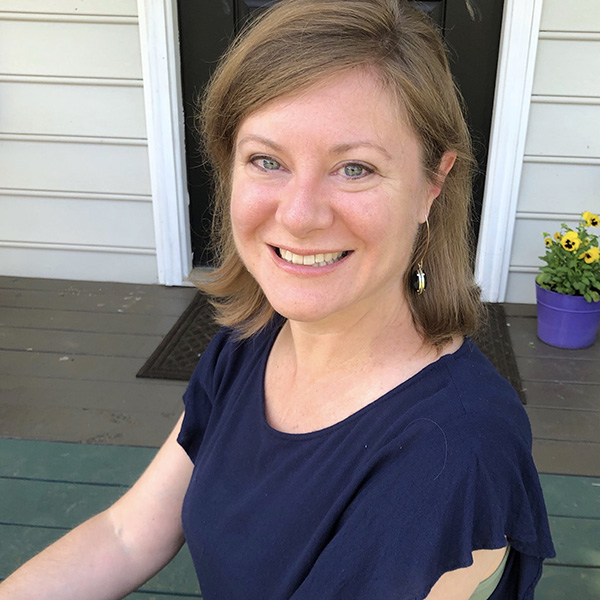
Rebecca’s Bio:
Rebecca D. Martin is a Virginia-based writer, educator, and museum docent whose work has appeared in various publications. Her essay “Mute,” on autistic muteness and hyperlexia, and her poem “Your Mind the Map,” on autistic stimming, have received particular recognition. Her passion is teaching, her inspiration is art, her safe place is nature, and her sustenance is poetry. Find her at rebeccadmartin.substack.com talking about all these things.
Printable View
How to Disappear
By Rebecca D. Martin
I. As Flame
While trying not to imagine your lost cat dead in the woods behind your house, you fall into the reflection the white taper candle flame makes not once, but twice in the bright afternoon window, though the second flicker might be called a refraction: three gold V’s stretching to the ceiling, to the sky, to the sky again like the shape of geese homing to a place they belong.
At first, you think it is four flames, then your vision clicks into place and the fourth becomes a ball of orange not-flame in the enormous juniper tree front and center to your glass-paned view—a bright round mass of fungus that grows harmless on particular kinds of evergreen, though harmful on fruit trees like the ones in your neighbor’s yard, and looks the like the fruit called orange hung all over like pretty Christmas ornaments.
Once you see the fungus for what it is, you can’t revert your vision. You cannot call back the fourth flame.
II. That Is a Woman
When the pastor at the church Christmas party unwraps Foxe’s Book of Martyrs, it is still acceptable in 2001 for him to make a joke: “This reminds me of my wedding night. Honey, hold on!” Your face is on fire, and it isn’t from embarrassment. It’s the way no one else seems to see the way the pastor’s wife blushes only because she is supposed to.
III. Who Is Probably Autistic
High school, 1993. Always excelling in English, you decide: this semester, you will get an A in Chemistry. You buckle down. Read the textbook, review the lab notes, listen to the lectures, and participate in class discussions—which will be your downfall.
One day, some scientific fact catches your attention. You can see the problem not in terms of explanations on paper, but philosophically. You hold the concept in imagination and rotate it like an orb. Hyperfocus. Lock in. Speak up and wax on about your insight. And—sweetest little thing—not only the students, but also the teacher, gaze at you in silent stupefaction. For thirty years and counting, you will wonder what you said wrong—the crinkled brow, the obvious confusion, the sense that everyone else thinks it isn’t normal to notice the grand beauty and strangeness of the world.
You are smart, so you go fugitive, stop saying a lot of things, but you don’t stop seeing the connections, the meanings, the flames in the tree.
IV. Also, Not Entirely Straight
Summer vacation two years before Chemistry. Cabin on the dock. In the living room, you watch a music video by the Indigo Girls. In the bedroom, you memorize “Love Will Come to You” and “Only Joking” while transgressively inhaling V.C. Andrews’ Flowers in the Attic. The way the brother and sister fall in love, but that isn’t actually the worst thing. The way they are abandoned and lost except for each other, except for themselves. The way you are realizing just this summer that your sexuality doesn’t fit the narrative you’ve been given. Let it burn in the periphery.
Later, you stand on the dock and your dad mocks you in front of the camera for not wanting to slide your fingers inside the cold, ribbed mouth of the fish you’ve caught. For being the way you are. You can’t make yourself do it. “Come on!” he taunts. “I came into this world sensitive,” Emily Saliers of the Indigo Girls will say in a documentary interview thirty years from now. You will discover only much later that, though it is unscientific, fire hidden under a bushel doesn’t diffuse.
V. But Now the Mother of a Teen Who Knows Her Mind
A Mark Messersmith exhibition at the art museum. You stand before an 84-inch-tall image of trees engulfed in orange flame. “Some fires are natural,” your scientific daughter explains, “and nobody’s fault.” Sometimes they are what the ecosystem needs. Decades ago, the Indigo Girls asked in your favorite song if you were on fire from the years, and you’ve never had to think twice about the answer. Look closely at Messersmith’s work, and you will find both day and night in most of his paintings. An impossible sky. Back in high school, you listened to “Kid Fears” so many times that the track went wobbly on the cassette tape, strangely incandescent.
VI. And Being Fully Human
You allow yourself to reimagine high school Chemistry class: decanting strange insights, everyone nodding. You and your classmates together, looking at the way electrons high enough to be liberated by the light last longer, become a vortex of being, and bodies move like thought and eclipse each other and reappear again more amazing than the first time. The way fungus becomes oranges becomes flame.
VII. You Reimagine Your Ending
At your desk by the bright window, you try again to visualize the four flames in a row. The illusion is gone, the fourth flicker decidedly round and eukaryote, an organism with a beating heart of a nucleus, unlike anything else out there and completely alive. You wonder if your scrappy little cat five days gone has ever laid eyes on the orange cyprus flame or been drawn to it, or if there is only emptiness for her in the mushroom fruit’s scent, since she doesn’t need it, and it does not need her.
You need her. You need the sheer animal aliveness of her, and you imagine that glowing fungal ball igniting into fire, all the false fruits on the tree sending up blazes that don’t burn the wooden branches or hurt them in any way, but generate, Old Testament-like, on this one tree, which a field guide tells you is distinguished by its half-dead appearance, something for the lost cat to catch sight of, to guide her way back, unsnuffed, suffused through her cells with the breath that will leave her someday, but not today, not while the tree is alive with flame.
***
What Rebecca Won:
2nd Place: Hallie Marbet
Bracciano, Italy
Congratulations, Hallie!
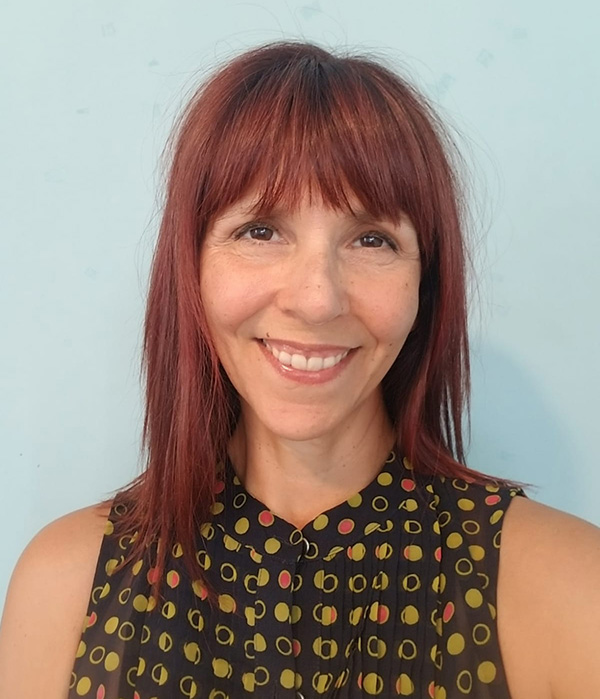
Hallie’s Bio:
Hallie Marbet has been writing voraciously for five years, creating both fictional and non-fictional work. Her story, Losing Leaves, was a runner up in a WOW non-fiction competition recently. In addition to her shorter pieces, she has written children’s books including: The Catch, Changing Charlie and Chalk Doors, along with three novels: Final Dawn, Fog and Divergent. She’s working on her next novel, Bad Progeny. She draws inspiration from tapping into varied memories and meaningful observation of everyday life. Her birthplace, Plum Island, Massachusetts, has always held her heart, but it never stopped her from living in more places than many. Currently, she resides with her family in Bracciano, Italy, teaching English as a second language to all ages. When she’s not writing or working, she’s either swimming, spending time with family or somewhere lost in translation.
Printable View
Anna, The Island and Me
By Hallie Marbet
The first time I step foot onto Little Cranberry Island, I know that I’m home and decide I’m going to move here. My friend laughs, giving me the impression that this happens a lot. Then, she takes me to her grandmother’s house.
Anna, a sprightly woman with sparkly eyes, owns the most comfortable abode I’ve ever been in with guests adorning her kitchen table like utensils, a true necessity. She agrees to let me stay there for an undetermined amount of time. A hug is our contract.
*
Weeks later, I catch the last mail boat over to my new rock in the ocean. During the ride, I close my eyes and consider my checklist: locked the car - check, broke up with long-term boyfriend - check, quit my job with benefits - check, stored all of my shit – check, changing my life – check. The list doesn’t matter now anyhow; I’m not turning back. I open my eyes and the stunning view strikes me. Jagged mountains scale the sky, hard lands reaching for soft heavens. Wispy clouds swirl in the distance capturing the inception of sunset in light pink ribbons. The air is crisp like an apple. I understand why painters paint, why writers write, why dreamers dream and why I’m doing what I’m doing.
*
I sleep like I’ve never slept before, pressing into the folds of the comforter that hugs me like it knew how much I needed an embrace. I get up late and head downstairs. Anna is entertaining seven people in her kitchen. I am: just waking up, cotton-headed, morning-breathed and a hot mess. I sit down with my bedhead and grin at the strangers knowing I am exactly where I need to be.
*
October is here. The winter lobster season rises from its summer slumber and rubs its eyes with a pincher and a crusher. I’ve locked in work aboard the Emma Marie, a beautiful, teal-colored boat, utter brilliance against a predawn sky. It’s 5:00 am and my shoulder is already jammed up as I shovel putrid, dead herring into a slop bucket. It’s gross, but sure beats frivolous water cooler conversations, dull office attire, unhappy customers, and lame computer problems. The smell of dead fish smells more like freedom than freedom ever did.
*
Anna is a mindful talker and an assiduous listener. She’s quickly becoming one of my favorite people. Warren, her husband and one of the most prolific lobstermen from the community, died a month before I met her. I’m the first person to know her like this, without him. She tells me her story about moving here many years ago, a place where she knew no one, marrying a man she loved but barely knew either, trapped on an island with nothing but the water to watch. Might as well have been some far-off country with a foreign language too difficult to decipher. I’m sure. She points to her chest and says, ‘But my home is in here. It goes where I go.’ And I immediately think I need to talk to her builder. But then she looks down with a sad expression and tells me that she’s not perfect, that she’s made mistakes. Me too. And her admission makes me feel better about my own missteps. We sip coffee and squint into the distance of ineffable memories.
*
It's bouncing around the stern with sea spray and large waves and views reaching across the water to other worlds. It’s down deep, where the critters crawl, and hoping our traps are full. It’s eating raw scallops and sea urchin eggs before sunrise with a smile I’ve never had before, a smile that hurts my face, a smile I never knew I was missing. And I never want to leave.
*
On windy days, Anna and I sleep in before lingering with our warm mugs, pausing between stories. She shares then I share. I think she likes being known as just Anna to me, no longer defined by another. And I relish who I am with her. I don’t have to be who I was; I can be who I am becoming. Like the island, Anna has saved some part of me from myself.
*
My father had said I was making a mistake moving to the island, that I would regret it. But I went anyway, pulled by the invisible strings tethered between us. The island and me. Its reach was long and lasting. I still feel the draw.
*
It is there, sprouted from the sea, a majestic mound, an oasis from reality. It’s living, breathing, moving currents of life. It’s laughter to yourself. It’s the sound of the receding water in the stones of Coast Guard Beach giving you goosebumps. It’s the wild red roses and their redolent scent bringing you back to a childhood dream. Little Cranberry Island is a place that gets under your skin, in your blood, and into your heart. And once it’s there, it stays forever. Every beat of your heart then thumps in rhythm with the love of that island. I pine for it and its moss-blanketed forests that breath with their rooted lungs, forests that fairies dream about, forests that I still dream about. It is there, sprouted from the sea, Little Cranberry.
It was there; I learned to lobster. It was there; I learned to talk. And it was there; I learned to listen. No, it wasn’t a mistake.
They never are.
***
What Hallie Won:

3rd Place: Jill Martin
Northern Virginia
Congratulations, Jill!
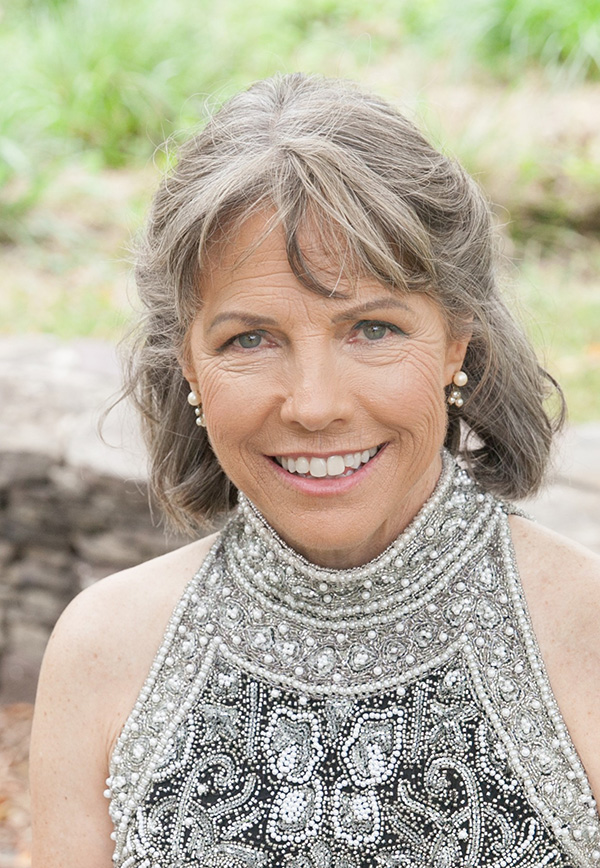
Jill’s Bio:
Jill Martin writes and lives in Northern Virginia. Previously a federal government lawyer, she now travels extensively with her husband, and writes a Substack newsletter about what she learns from her travels (https://jillme3801.substack.com/). She has completed her first novel, which is still unpublished, and has started on her second. She also writes short stories, several of which have won prizes. She loves going to writing conferences to improve her craft, and enjoys meeting other writers.
Printable View
Recipe for Mom’s KitchenAid Mixer
By Jill Martin
1. Get out the old KitchenAid.
Remember that it’s super heavy (don’t hurt your back). Attach the whisk thingy. Make sure the bowl is tightly twisted on so it doesn’t fly off and spew butter all over the kitchen. Plug it in, while holding your breath and hoping it doesn’t electrocute you because the ancient plug end looks iffy. As you get out your ingredients, be prepared for a complicated and conflicting mix of feelings.
2. Add 1 tsp of feeling old.
This KitchenAid is older than you (but not by much). It probably dates from the early- to mid-50’s. You’re using something that’s seventy years old and still works great. Hooray for U.S. manufacturing and all that, but mainly, why can’t they make things like they used to? Well, that makes you feel like an old person because that’s what old people say. But do you care if it makes you sound like an old person? No. And that makes you happy (that you don’t care).
3. Add 2 tsp conflicting thoughts about Troy.
KitchenAid mixers are special. They were made by Hobart Manufacturing, which is headquartered in Troy (Ohio). These facts were constantly drilled into you as a child by your mom who was from Troy and NOT from Middletown (Ohio) where your dad was from and where your mom was forced to live, sigh, in a town that was nothing like Troy and didn’t have the right people or the right houses or anything. Middletown, where you grew up, was so far from Troy and it took all day to drive to Troy. (Although when you look it up on Google maps, it’s only an hour’s drive from Middletown, what?)
Anyway, add some nice memories of driving to Troy and seeing Betsy, your friend who was the daughter of your mom’s friend, but then watch out because that brings up some scary memories because Betsy had hemophilia and a mean dad.
4. Add 2 Tbsp happy thoughts of Mom.
You will miss your mom, in a nice way, because the mixer is associated with happy, singing mom, not angry mom or drunken mom. The happy mom gave you big smiles and attention. Why was she happy when using the KitchenAid? You don’t think it’s because she liked to cook (because she really didn’t); probably the mixer made her happy because it was all about Troy.
5. Add 2 Tbsp feelings of connection.
When you use an old object that was previously owned by someone special to you, you get a nice feeling, a sort of Proustian deja-vu feeling but it’s more than that; it’s a cosmic-Zen-everything’s-connected feeling, like you’re close to that person in this moment, through this object that they held and now you’re holding.
You still have the old hand-crank phone from the farm in Ohio, the phone that your grandparents used, with the two round black bells on the front of the box, and the speaker you talk into, and the listening handle that you lift from its cradle, and when you were little at the farm you could listen in to the party line; you had to stand up on a wooden stool to reach the phone and then you heard the operator connecting someone or the neighbors complaining about their cows or something.
Your dad and your aunt talked on this phone, and so did your grandparents, and maybe family before them, you don’t know, but it’s fun to think about. There is so much magic in that phone. So much power in objects.
That’s how it is with the KitchenAid.
6. Add 1 tsp memories of your brother and the dogs.
Your brother Ted used the electric can opener on the front of the KitchenAid to open the cans of dog food (your mom had all the attachments, as a loyal KitchenAid user). Ted always had the job of feeding the dogs, and you loved the dogs, and you still love your brother, and you think about how lucky you are to have a good relationship with him.
Then you think it’s strange that, when you were kids, feeding dogs and mowing the lawn were Boy’s Jobs, and setting the table and helping cook were Girls’ Jobs, despite the fact that sister Molly was the one your dad favored on the farm to help him with all of his manual-labor tasks (she was strong and liked that work, so that made both your dad and Molly happy). But your family didn’t talk about contradictions like that.
7. Add 1 Tbsp. sadness about Mom.
Your mom is dead and the KitchenAid is not. She died in 1995 at age 63 (of lung cancer). The KitchenAid lives on.
Then you think that maybe your mom lives on, in the KitchenAid, because you’re using it. That helps, and that’s why it’s only 1 Tbsp and not 2.
***
What Jill Won:
 RUNNERS UP:
Congratulations to the runners-up! It was very close, and these essays are excellent in every way.
Click on the titles to read:
The Landing by Frances Figart, Flag Pond, Tennessee
Weeding Your Garden: A Primer by Sophie Berghouse, MD, Rhine River Valley, Germany
Salaam by Sophia Ahmad, Basking Ridge, New Jersey
I Kept Driving On by David McArthur, California
World’s BEST Special-Needs Parent Recipe by Sophie Berghouse, MD, Rhine River Valley, Germany
Instructions for Crafting a Love Tapestry by Fiona Jensen, Canada
Sweater by Sara Winslow, San Francisco, California
HONORABLE MENTIONS:
Congratulations to our essay contest honorable mentions! Your essays stood out and are excellent in every way.
Brain Surgery for Dummies by Annalisa McMorrow, San Francisco, California
Dear Martin J. Hamer by Judith A. Hamer, Redding, Connecticut
Lost Boots by Wendy Fontaine, Valencia, California
Giving a Customer a Straw by Pearl Reagler, Winston-Salem, North Carolina
Offbeat by Songyee Park, Bangkok, Thailand
Dear Self, You Made the Right Choice by Elizabeth Benson, Clovis, New Mexico
Liner Notes: A Letter to the Mother I Never Had by Hannah Andrews, San Diego, California
Goldfish by Nicole Del Prete, Port Saint Lucie, Florida
Reflections of Trauma: From the Perspective of a Police Detective Survivor by Renae Griggs, Haven, Florida
Running Through the Years by Sophie-Blanche Misslin, Edinburgh, Scotland
What the Honorable Mentions Won:
IN CLOSING:
This brings the Q2 2026 CNF Essay Contest officially to a close! Although we’re not able to send a special prize to every contestant, we will always give our heartfelt thanks for your participation and contribution, and for your part in making WOW! all that it can be. Each one of you has found the courage to enter, and that is a remarkable accomplishment in itself. Best of luck, and write on!
Check out the latest Contests:
https://www.wow-womenonwriting.com/contest.php
|
|
|
|
|