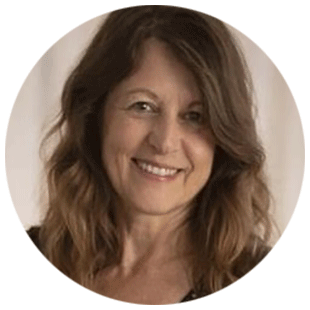
A journal that lives and breathes for unique and exquisite lyrical work, Eastern Iowa Review is a hub for lyric essays and prose poems. Even the fiction published in the online (at times in print) journal focuses on how language can influence the reader’s experience of a piece. With such a great focus on language, I, a lyric essay nerd, have always wanted to be published by a journal that supports the type of work that I live for. After one of my essays was accepted last year, I delighted in getting to know the editors and the content of the journal more. I spoke with the journal’s founding editor and nonfiction editor, Chila Woychik, about the journal, the editing process, her own writing, and the larger publishing community.
WOW: How would you describe the overall vibe of Eastern Iowa Review?
Chila: I like to call it “a journal of truth and beauty,” or, as we used to once say, “a journal of good spaces.” The vibe is beautiful language, beautiful (yet truthful) thoughts, never avoiding the hard truths but presenting them wrapped in rose petals. We don’t need more blatant and bloody thorns in what I see as an already hurting world right now.
WOW: You know, I’ve been submitting to the journal since 2015, and all my submission were pretty much full of bloody thorns. So even though I submitted lyric essays, they weren’t quite what you were looking for. So, as a journal that started in 2014, I’m sure you’ve seen numerous submissions as well as a variety of pieces submitted. Out of all these options, can you pinpoint what types and genres EIR prefers?
Chila: I love the lyric essay, which is a bugger to write well. The extended lyric form takes so much work and time, and I’ve met very few that have been correctly named. I find a great prose poem to be a sort of mini-lyric-essay in the sense that they’re likewise not slutty, not easy. They’re hard and demand respect. So I love to read those, and will gladly accept the exceptional ones. Short fiction – I like, but it should be unique and engaging, and creative nonfiction is something everyone takes, so we follow suit. It’s a good form, though too often rather mundane, in my opinion.
WOW: Yeah, I definitely lean more toward the lyric essay. Although creative nonfiction, which I would say is more linear and has more structural and organization elements similar to fiction, can tell a great story in intriguing ways. So considering all of the genres you come across, I’m sure you see a number of interesting pieces each year through your submissions! So, what is the submission process like and what’s the turnaround time for EIR?
Chila: We use Submittable only, no email or postals. Turnaround time is anywhere from 1 day to 1 month or so, depending on our schedules.
WOW: Schedules can be tricky to navigate for the editors of literary journals. With their own writing to do, plus, you know, jobs, it takes a lot of passion and dedication to edit for a journal. What’s your role there?
Chila: I’m the founder and editor-in-chief. I make the final decisions within our very small team, though our fiction editors and nonfiction editor offer good insights for me to consider before saying yea or nay. I couldn’t do it without them, that’s for sure!
“I find a great prose poem to be a sort of mini-lyric-essay in the sense that they’re likewise not slutty, not easy. They’re hard and demand respect.”
WOW: It truly takes a village! I’m thinking now about the editing process. I remember when my hermit crab essay, “Dear Dreadlocks,” was published by the journal and I was surprised (if not more than relieved) that the piece wasn’t edited that heavily. Was mine just an oddity or is that what writers can expect with the editing process?
Chila: I’m a very light-handed editor, feeling that a piece needs to pretty much be perfect before the author sends it in. I have neither the time nor the interest to massively edit work submitted to us. If a piece is stellar but has one or two tiny items that need tweaking, I suggest it (and insist if it’s something like a typo, etc.), but other than that, the piece should be ready to go when we get it.
WOW: When I used to edit for some journals, I found that I too preferred pieces that were already polished and shining. For me, I would edit them in my head as I went, and if I found too many errors to keep track of in the first couple of pages, I wouldn’t finish reading the piece. This helped me to become a stronger writer—I edit my pieces to death to make sure they’re perfect when I submit them. How do you think your editing informs your writing?
Chila: Oh my. I’m constantly aware of what I myself write, and am incredibly tough on myself when it comes to writing. I’m sure some of that derives from seeing so many pieces from really great writers over the years. I think I’m a quick learner, and I take mental note of the pieces I love the best, why they work, what makes me love them, and such. Reading wonderful pieces of writing, the best of the best – I recommend it to all writers. Put that mediocre stuff away. Read the good.
WOW: I actually have a sticker that says, “The 6 rules of writing: write write write read read read.” I find that reading really improves my thought process when I write. I read mostly essays and some biographies to really get me thinking and to inform the lyric essays I write. So, with so much inspiration, what type of writing do you do?
Chila: Mostly lyric forms, some fiction, and some longer creative nonfiction. I enjoy writing the occasional prose poem too, but others do it so much better that I usually default to lyric essays instead, and the occasional oddball piece of fiction. Lately, I’ve been focused on the last two books in the Maddie Hill cozy mystery series – a series about, of all things, a small press publisher. (Sound familiar? Ha.)
“Reading wonderful pieces of writing, the best of the best – I recommend it to all writers. Put that mediocre stuff away. Read the good.”
WOW: I dabble in some fiction, but I lean toward the lyric essay too. They’ve taught me how to, as I call it, “edit by ear.” That is, soaking in the language has helped me to understand how writing works based on how you hear it. How does your writing practice influence your editing and/or work with EIR?
Chila: When I receive praise from other editors and they say they’d like to publish my work, I can see what worked, what they’re looking for. Conversely, when a piece is declined several times, that usually tells me something too, and I try to learn from that. Every single lesson, every acceptance and decline, helps me know what works and what doesn’t, and I’m sure this crosses over into my editorial work at EIR.
WOW: Circling back to the journal’s mission to provide a space to share engaging and challenging work, it seems like EIR really promotes a writing community where people can come and relish in language. So, along with this, how else do you think EIR contributes to the larger writing community?
Chila: Well, I’m not sure it does to any great extent. That being said, we’ve been quoted in several online articles and at least one doctoral thesis, and some of our authors’ pieces at EIR have been mentioned online by writing outlets, etc., so maybe we are making a small impact. Pushcart’s Board of Contributing Editors nominated a piece or two of ours for inclusion, we’ve published a Best American Essay notable essay and a Best Small Fiction inclusion, and maybe a thing or two more. So yes, maybe we’re making a small impact for the cause of “truth and beauty.” At least, that’s my hope.
WOW: Thank you for your time, Chila!
Writers: Eastern Iowa Review is open for submission for an unthemed issue until March 15, 2026. Submit your lyric essays, creative nonfiction, fiction, and prose poetry: https://easterniowareview.submittable.com/submit
***
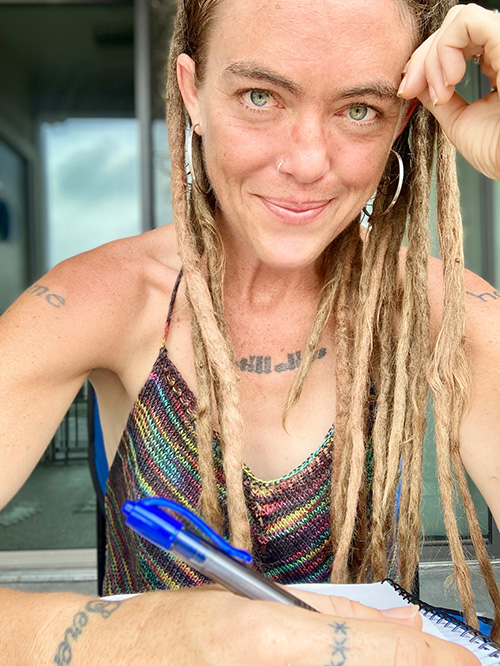
Chelsey Clammer is the award-winning author of the essay collections Human Heartbeat Detected (Red Hen Press, 2022; finalist for the Memoir Magazine Book Awards 2023), Circadian (Red Hen Press, 2017; winner, Red Hen Press Nonfiction Manuscript Award), and BodyHome (Hopewell Publications, 2015). Her work has appeared in Salon, The Rumpus, Brevity, and McSweeney’s, among many others. She was the Fall 2019 Jack Kerouac Writer-In-Residence through the Kerouac Project. Chelsey teaches online writing classes with WOW! Women on Writing and is a freelance editor. Visit her website at: www.chelseyclammer.com.