few weeks ago, I was chatting with a writing friend about submissions. More specifically, we were discussing a particular publisher who accepts stories based on open calls with no fees. Each volume can receive over a thousand submissions, so the competition can be pretty fierce.
I’ve been fortunate to have some success with this publication, but my friend was frustrated. Despite multiple attempts, she’d only had two pieces published with them in the last decade.
She finally blurted out, “Have any of your stories been rejected?”
I paused for a moment. Technically, the answer was “yes.” There were definitely stories I’d submitted that hadn’t been accepted for publication.
But there was something about attaching the word “rejected” to my beloved stories that made my skin bristle.
I write creative nonfiction, so all my pieces are deeply personal. They’re infused with funny, heartbreaking, and life-changing memories. Each story is like a slice of my own skin.
Attaching the word “rejected” to something this intimate felt wrong, like kicking a puppy or shouting at a grandma.
I answered her honestly, but the conversation stuck with me, as I considered my relationship with rejection.
My Journey with Rejection
For the first decade of my career, I was an actor and singer. (I’m still a singer and now a writer, but that’s another story for another day.)
Very early in my professional life, I realized that a good actor needed to be able to handle two things—direction and rejection.
Taking direction meant I had to stay teachable and open to new ideas. I learned to accept, and actually invite, the ideas of others into my creative work. Learning this skill has benefited me in every aspect of my life. As a writer, it means I’m never afraid to receive an editor’s feedback. I may not always agree with them, but I’m not scared of that email!
Handling rejection was more difficult. Being an actor means auditioning—a lot! Some weeks, I had anywhere from three to eight auditions, sometimes doing several a day. I wanted to succeed at all of them.
But each time, I was going up against a room full of wonderfully talented people. As the “nos” piled up, it was easy to become discouraged and disillusioned.
If I was going to be a full-time artist, I needed to find a way to accept rejection without taking it personally, without having each “no” shut me down.
Thankfully, I learned how to reframe rejection.
“The first lesson in reframing rejection is to see it as a single step and not the end of the journey.”
Reframing Rejection
Whether we’re trying out for a play or submitting a story to a publisher, the stakes are always high. We want our art to be embraced. We want the work, money, and opportunities that come with a “yes.” Our plans and dreams are tied into the acceptance of others, and that can be incredibly complicated. It can make us feel like we have no control over our destiny.
Rejection often feels deeply personal, especially when it’s connected to our heartfelt, creative work. It can trigger memories of being shunned by kids at school or having someone you love disrespect your writing as an adult. Some people become so terrified of rejection that they actually never submit their work.
The first lesson in reframing rejection is to see it as a single step and not the end of the journey.
Your creative life isn’t like winning the lottery. There’s no one ticket that will bring you instant success. One “yes" or “no” won’t make or break your career.
Play the long game and see each submission as simply a step in your journey. Some steps are forward; some are backward. But if you keep walking, you’ll eventually head in the right direction.
It’s Not About You ... Necessarily
Nepotism and politics are real. A harsh lesson, but true all the same. An agent once told me, “You never know what adjudicators are thinking. You could end up losing a gig because you remind the director of his ex-girlfriend!” Her point was that not all rejections are about us or our work. Sometimes, we’re just caught up in something that has nothing to do with us.
Also, let’s talk numbers for a second. For any given project, there will be way more submissions than space on the page. The New York Times rejects 99.5% of Modern Love submissions. Chicken Soup for the Soul regularly receives several thousand stories for each 101-story volume. Many stats suggest your chances of having your book traditionally published are between 1 and 5 percent.
With odds like that, lots of great work will be turned away! Take heart in the numbers, and realize that rejection is often not personal.
Submit Lots and Build Your Armor
When I first started auditioning, I was thrilled and nervous every time I walked into the casting office. But as the months and years went on, I became less starstruck and developed the attitude of a professional actor.
I saw each audition as an opportunity to learn my craft, hone my auditioning skills, and connect with a casting agent. I realized I might not be the right fit for this project, but if I do well today, they might remember me for a project further down the line. And yes, that happened several times in my career.
It’s the same with submitting our pieces to publishers. Submit lots and often. Do it until it doesn’t make you nervous. Develop a professional attitude. Realize this is just one step.
When rejections do come in, let them make you stronger. I once read a story about a writer who collected all her rejection letters and used them to decoupage her coffee table. Every day, when she sat on her couch for her morning coffee, she would be faced with a litany of rejection. I don’t know if I could be that strong, but for her, seeing those letters reminded her of the battle ahead and the strength she would need to face the day.
Maybe You’re Just in the Wrong Place?
In our house, we’re fans of the NBA Toronto Raptors (“We the North!”). That said, there’s no way my husband or I should ever try out for the team. It would be a tremendous waste of everyone’s time. But for several years, we sang the national anthems at the Raptors’ Christmas games. We were able to be part of the game by finding the right place for our gifts.
Sometimes, we experience rejection because we’re not submitting our work for its best potential home. I’m not saying we shouldn’t try to push our boundaries, but it's important to be realistic in our expectations.
- If I submit a haiku for a science journal, they’re going to reject it.
- If I submit a murder mystery for a children’s picture book, they’re going to reject it.
- If I submit a political dissertation to a cooking magazine, they’re going to reject it.
Give your work its best chance of success by practicing good craft, getting helpful feedback, and finding its best possible home.
“I don’t think of my story as being ‘rejected.’ I just think of it as ‘not accepted at this time and in this place.’”
Love Your Work
Thinking back to my friend and the conversation that sparked it all, there’s one more reason why I bristled when she asked if my stories had been rejected:
I love my stories!
By the time I’m ready to share any piece of my work, I’ve poured my heart and soul onto the page, fussing over every technical and creative detail. I’m confident it’s the very best work I can offer at this time. I’m trusting this is the story I’m supposed to tell to this particular audience.
Finally, I click “submit” and say a little prayer that it will be accepted, published, and widely read.
But if a “no” arrives in my inbox, I take a deep breath.
You see, I don’t think of my story as being “rejected.” I just think of it as “not accepted at this time and in this place.”
That small shift in language is seismic!
If my story is “rejected,” it’s discarded, cast off, less than.
But “not accepted” gives me so much space for opportunity!
Sure, I might have a moment of disappointment, but my next thoughts are, What can I learn? What can I change? Where can I submit it next?
A “no” isn’t the end. It’s just a step…
One final story: last year, I pitched a Christmas essay to a major news website. They accepted the pitch, and I wrote the piece. Ultimately, it was turned away in the kindest rejection letter ever. The editor was swamped with submissions and explained, “I’m having to say ‘no’ to a lot of great writing.”
A few months later, I did a full rewrite and submitted it to a popular anthology series. Sadly, it wasn’t accepted there either.
Finally, I suggested the idea to a faith-based magazine. The editor loved the pitch and asked to see a full article. Again, I rewrote my piece to fit their target audience. In November, I was rewarded with publication!
It would have been easy to become discouraged in this process. Instead, I allowed rejection to spur me forward, inspire me to find the best home for my idea, and write it in a style that best suited the publication.
I encourage you to reframe rejection for your writing! Submit often. Don’t take any of it personally. Find the best possible home for your pieces. Use each “no” as an opportunity to learn.
We need your unique voice! Don’t let rejection stop us from hearing what you have to say.
***
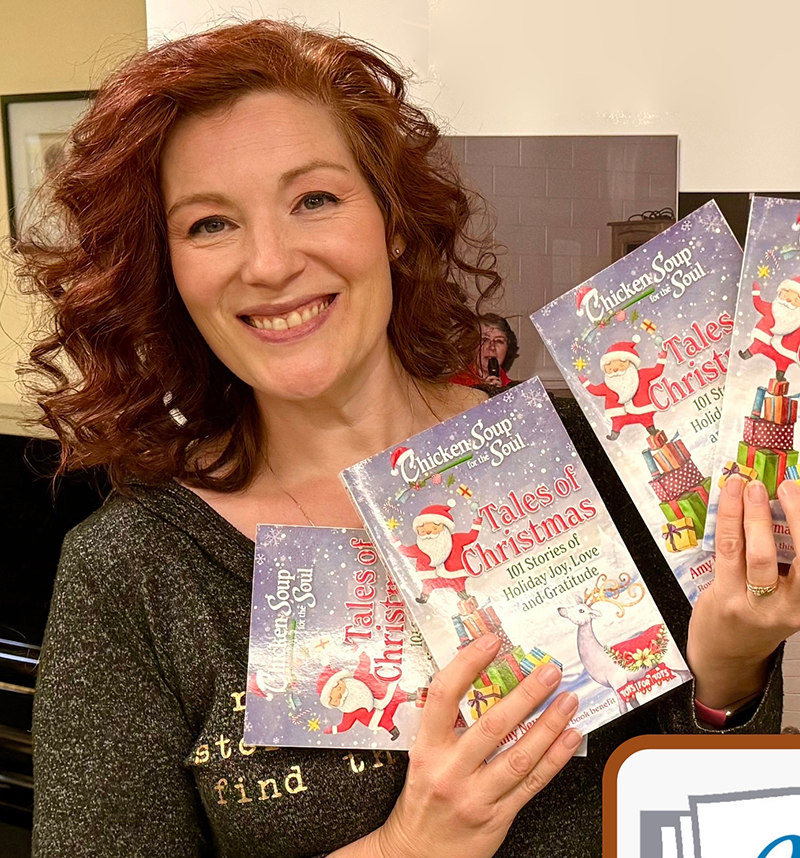
Allison Lynn Flemming is drawn to the power of story to grow hearts and communities. Allison and her husband, Gerald Flemming, form the award-winning, nationally-touring music duo, Infinitely More (based in St. Catharines, ON, Canada). 2026 will see both the launch of a new Infinitely More album and Allison’s first children’s book. Publications include Guideposts (20+ stories), Chicken Soup for the Soul (16 stories), Faith Today, Warner Press, and The Upper Room. www.InfinitelyMore.ca