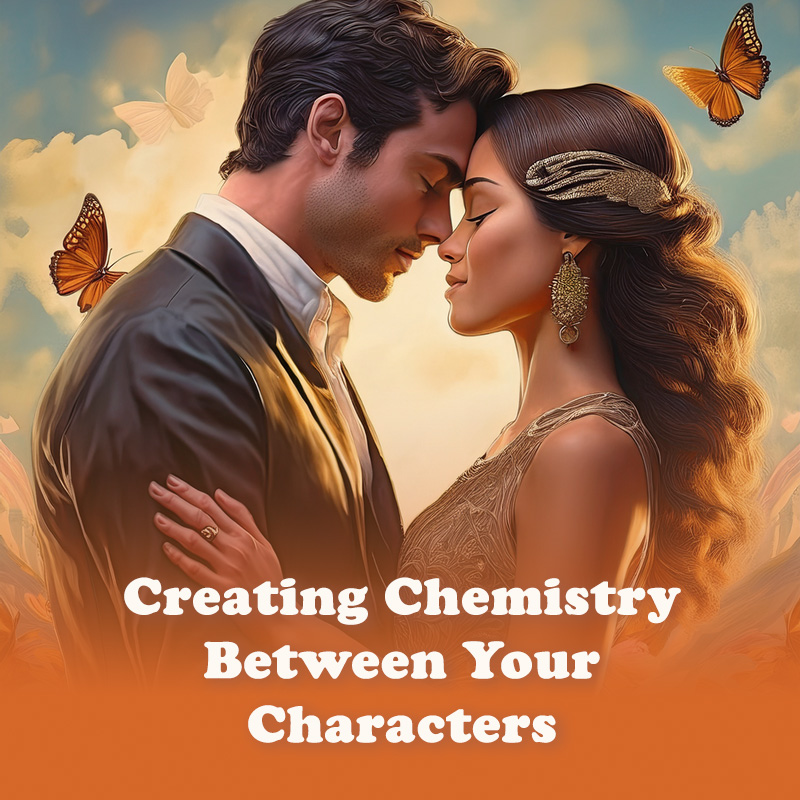
Creating that romantic, passionate spark between your characters is vital, especially when writing romance. If there’s no chemistry between the two, how can you expect your readers to believe that they find each other attractive and can fall in love?
Making that passion and attraction spring from the page, so that your readers believe it, is necessary, if you want them to keep on reading and be invested in the story.
But how can you achieve this chemistry between your characters? In the month of February, what better time to look at creating chemistry?
After all, it’s almost Valentine’s Day…
Spark
All romance novels (or novels with a romance built in) need their two main characters to feel an immediate spark—even if they try to deny it themselves! Whether it’s a mutual attraction, a flicker of interest, or an immediate dislike (enemies to lovers is my favorite trope), there has to be something there to trigger their initial feelings.
Perhaps your characters clash over an item in a shop that’s for sale or bang into one another on the street, when one of them isn’t paying attention to where they’re going. You might have them staring at one another, before they both realize they want that last, much sought-after gift on Christmas Eve, and they rush forward at the same time to grab it.
There has to be some sort of initial “bringing together” that ignites the start of their romantic story.
That Was Close
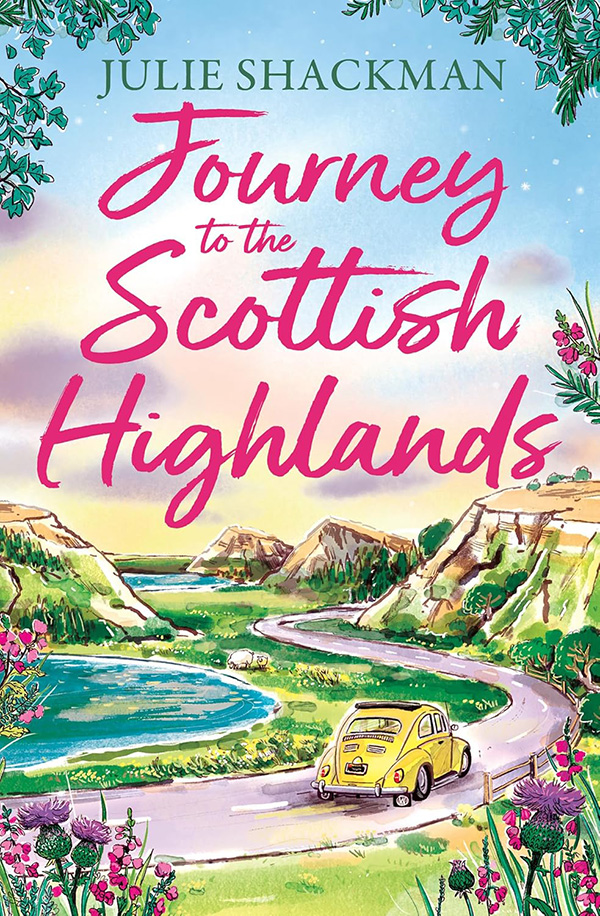
In my latest book, Journey to the Scottish Highlands, my two main characters Daisy and Evan find themselves in close proximity when Daisy drives them to the Scottish Highlands.
This enabled me to essentially trap these two strong characters together in Daisy’s daffodil yellow, secondhand Volkswagen Beetle and begin to create stirring emotions and flirtations between both of them—even if they were trying to not only deny it, but refuse to acknowledge this growing attraction even existed in the first place!
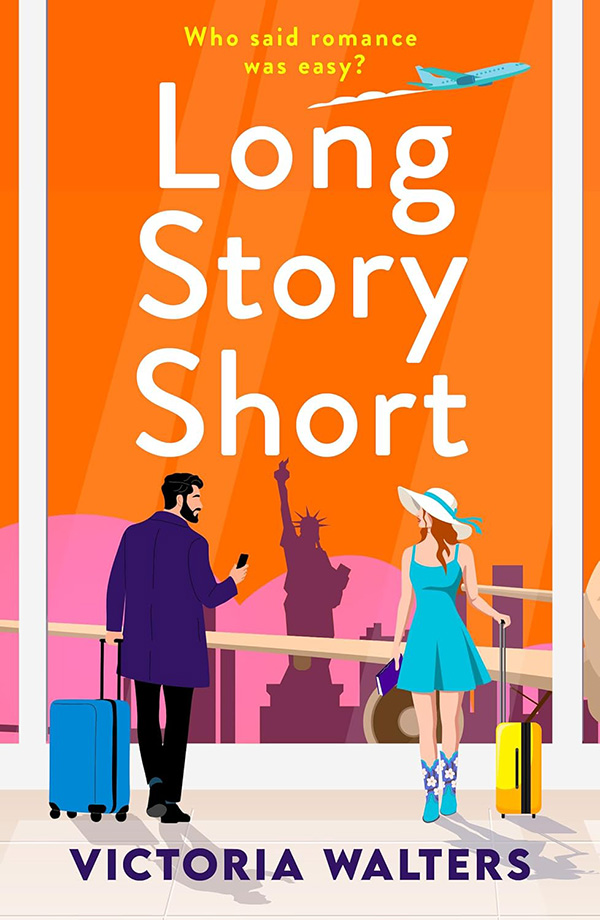
Bringing your two characters into a similar situation allows you to use a romantic trope (enemies to lovers, meet-cute, friends to lovers, etc.) to good effect.
One of the best books I read this year, which created that close proximity sexiness to wonderful effect, was Victoria Walters’ Long Story Short about an ambitious young woman, who wants to become a literary agent. She’s given the task of trying to resurrect the fading career of a gorgeous, grumpy romance author and is sent to New York with him to try and do just that.
Compare and Contrast
It’s often said that opposites attract, so perhaps you create one of your characters as a book lover and the other only interested in gadgets. Or maybe one is obsessed with Christmas and their love interest is a Grinch?
This is a perfect way to develop both your love interests and carve out room for character growth.
You can show the reader the effect they have on one another and how this changes each of them for the better as the story progresses.
Look at this example:
Liam hated Christmas. The thought of it made his stomach twist. But Maisie’s joyful expression, as she admired the fairy lights, made his lips tremble with a ghost of a smile.
Open Up
Using dialogue to show relationship development is also an excellent way to illustrate how your characters are growing closer to each other.
You can bring in revelations, like when they speak to each other, revealing secrets that they’ve never told anyone else, so that the reader witnesses firsthand how your characters are developing trust and intimacy with each other. This shows they are prepared to open up to one another.
This method is especially effective if one character tends to be very private and closed-off.
Actions Speak Louder Than Words
That said, action over dialogue is more important in my opinion. The old adage of “actions speak louder than words” is true when writing chemistry between two characters. So, use your writing skills and show with action how your characters are growing closer. There are several ways to show readers what’s happening between the two characters: innocent (or not so innocent) flirting, hands accidentally brushing against one another, or breath catching in their throats. An extremely shy woman smiles when she doesn’t smile much or one of them thanks the other when he is grumpier. Your reader will be able to appreciate the intimacy and immediacy of these actions and relate straightaway!
Show, Don’t Tell
This ties in nicely with the previous advice. Everyone tells writers to show and not tell when writing, and writing romantic scenes is perfect for this.
Show through descriptions of the chemistry between your two love interests: flickering gazes; shy smiles; ragged breaths; the blossoming, shocking realization that one of them is crazy about the other. It’s all about sensations, feelings, tumbling emotions, realizing the depth of feelings that sweep them off their feet. It’s the idea that they can’t control how much they are thinking about and want that other person.
Here’s an example:
Liam appreciated the sparkle in Maisie’s bottle green eyes. His stomach flipped like a circus acrobat. God, she was gorgeous!
Channel how you feel when you fall in love and bring that screaming headfirst into your story! One of the best books to read, which illustrates this perfectly, is the wonderful The Wake-Up Call by Beth O’Leary. This book uses an enemies to lovers trope at its finest and builds gradually from intense disdain to full-blown passion and love. Please read it!
Feelings
Falling in love is the most wonderful sensation—it’s also chaotic, mind-blowing, and surprising!
Very often, there are bumps in the road, too, involving misunderstandings or conflict.
You can’t have a story where everything goes well and where your love interests fall in love and live happily every after.
To get there, they have to experience the ups and downs like we do—and it makes a much better, more satisfying, and compelling story!
There has to be a bit of a rollercoaster for them, not just in terms of emotions and feelings. Maybe there is some major misunderstanding between them that threatens to break them up? Then you can have fun solving their problems and reuniting them again for their happy ever after.
Heart to Heart
Think about the fizzing in your chest when you see that special someone or even your inability to sleep. All these vivid, exhilarating emotions and sensations have to come together and spill over. Describe how this is making your characters feel about themselves and each other.
Do that, and your reader will be able to relate to these highs (and the lows) and urge your characters to reach the happiness they deserve.
Words Matter
Think about the feelings of love and attraction and the imagery, colors, and sensations they paint when you do.
It’s powerful, complicated, and consuming!
So, you want to use words and language that convey all this to your reader.
You want your characters’ romantic journey to draw in your reader, as they traverse the path of true love with their choices.
Blood rushing in her chest, her heart charging, excited breath catching in his throat—her skin sizzles at the sensation of his touch…
Bring power and descriptive scenes whenever your two love interests meet, kiss, are in close proximity, argue, and flirt. Basically, whenever they are together! Make their interactions sizzle, and your reader will be desperate to read on.
For example:
Maisie couldn’t stop staring at the generous curve of Liam’s mouth. She wondered what his kisses tasted like.
Get Flirty
Verbal flirting between your characters will create tension, deepen the intimacy, and create intrigue and anticipation.
It will also stir up the possibility of “will-they-won’t-they" in your story and make your reader keen for these two characters to stop dancing around one another and kiss!
You could use subtle double meanings, jokes, or banter here. This will show the growing bud of attraction and will make your reader wonder when these characters will get together as your story develops.
Using your own personal experiences of falling in love and feeling attraction will bring an even more realistic and romantic angle to your story, enchanting your reader. They too will almost more than likely fall in love with your characters because of it!
Happy reading and have a very flirty, fun and romantic February 14th!
***

Julie Shackman’s latest feel-good romance, Journey to the Scottish Highlands, is out now in e-book, paperback, and audio from the HarperCollins imprint, One More Chapter. Visit her website: julieshackman.co.uk. Connect with her on social media: X @G13Julie, Instagram @juliegeorginashackman, and Facebook @julie.shackman.