eaching is a profession that provides several wonderful benefits for writers, including: personal fulfillment, the joy of sharing knowledge and the love of reading and literature, flexible scheduling, community building with likeminded people who love the arts, and enhancing one’s income.
Since 2020, when class meetings shifted online and our ease with virtual classes really took off, there’s never been a better, easier time to leap into becoming an instructor, with opportunities both online and in-person.
Let’s take a look at a few ways interested writers break into teaching online, whether already a seasoned educator in the classroom with a teaching degree, a current student in an education program working towards obtaining a degree, or a prospective educator just setting off on the path to pedagogy.
1. Begin where you are.
If you’re interested in teaching but don’t have any direct experience yet in the field, no worries. Start participating immediately within your community. Self-starters have a way of impressing their fellow writers and prospective students. If teaching is calling to you, don’t wait a long time, thinking it over week after week and month after month. Instead, why not start a writer’s workshop that meets once or twice a month with five or six writers in your community? That’s practical teaching experience that will serve you well.
Check into art fairs or First Fridays or other local events where creative folks meet and network. How about volunteering to teach a writing seminar or become a guest speaker for a youth organization or another social group within your city or town? Network within your community—try tutoring a writing or literature student, either through a local school or directly with high-school or college-age students. Librarians are wonderful resources to ask about writing-based events and opportunities/events to attend.
Once you have a few months to a year of volunteer experiences, put these experiences in your cover letter for applying to future online positions. Some programs have a seminar or other program to train volunteers—you can list these teaching experiences on applications, too.
2. Go your own way.
One of many exciting elements of teaching is that you can teach for a credited academic program, a non-credited program that offers specialized freelance courses, launch your own classes, or do a mixture of these kinds of teaching. Many schools now offer both in-person and online course offerings.
Once you’ve networked within your city or town and attended open mikes, readings, conferences, or other literary events or mixers within your field and have started to make connections and network with fellow writers and readers, it’s possible to begin teaching one-on-one. You can launch classes through your own asynchronous website or platform, or through online conferencing via computers or phones in real-time. Individually run courses can be scheduled to match your own and your student’s schedule at a time mutually beneficial or can be asynchronous, offering feedback through email or on shared documents, or a mixture.
As a freelancer, it’s amazing how many times a writer who lives near you or who knows you personally from taking your class might ask to share your name with their friend who lives across the country or across the world. Word of mouth after making authentic and positive interactions with new acquaintances can go a long way. Make sure to have a section on your website that briefly mentions your teaching interests, passions, and areas/course subjects you teach or would like to, so you’ll be prepared to communicate your course offerings to individual clients as interested students are referred and come your way.
3. Publication credits can go a surprisingly long way.
Publication credits give street cred that you have studied your craft and that editors have taken chances on your work and enjoyed it enough to publish it and share it with their subscribers and readers. They demonstrate that you’ve taken the time and effort to study your market and submit your work, the resilience to move past setbacks and work around frustrations. Publication credits also suggest that you can articulate what makes a piece of your writing work well, that you know how to write a query letter, and that you have good communication skills, both on paper and off.
Prepare a section on your resume or CV that lists recent publications, and begin to submit your writing to publications with an eye towards getting two or three pieces published. Plus, if you plan to teach a subject related to writing, make sure that you are actively, regularly practicing your craft, whether in a writing group, book club, while writing a project such as a novel or memoir or poetry collection, or through taking writing classes and seminars, which will enhance your own artistic skills, enthusiasm, and depth of knowledge.
4. Fortune favors the prepared.
Speaking of networking and preparation for referred students, create a sample syllabus for a class you’d love to teach.
- Include a title, class text, course description, reading assignments, and writing assignments. Really lean into the process of envisioning your ideal student and what you’d most like to convey in the course.
- Describe the homework and/or projects students will create. Consider how much direct feedback on student assignments you’ll give and how often/when you’ll assign assessment and feedback/conferencing.
- Add a teacher’s statement of 50-100 words with objectives of what students can look forward to learning and/or your favorite topics and themes to teach.
- Make sure to include a brief biography about you, which can either be shared with potential students or which can be used as a template for when writing students ask about the kinds of writing classes you offer or approach you with a course they’d like to study.
You can then hand-tailor your ideal class to that student’s interests and needs.
5. The teacher is also the student.
There’s never been an easier time to take online teaching courses to better prepare you for the online classroom, either to brush up on or refresh your skills in the classroom, from courses in technology to specific Masters in Fine Arts (MFA) or Master of Arts (MA) courses, or to learn something new-to-you. Many programs offer either courses for degree-matriculated students who will take an entire program of classes or individual, non-degree courses in specialized topics on an exciting array of topics within a diverse medley of fields that students can cherry pick.
Some day-jobs pay for a certain amount of credits per year, especially if the topic you want to teach online coincides well with your day job, and many current or veteran military personnel can also get financial support or tuition reimbursement for a certain amount of courses each year. Some programs or social organizations you may already be a part of also offer scholarships for further education and enrichment. Make sure to look into any educational benefits you may have earned to take full advantage of tuition-free opportunities to expand your knowledge base.
6. Keep your head up and don’t get discouraged if it’s not an immediate yes.
It may take several months to get an interview or an offer, especially if you apply to teach for a school or program which gets many dozens of applications for one or two positions as they open. This is perfectly normal and the experience of many teachers. Don’t let one or two or even five or six no-thank-you responses or radio silence to your applications or query letters stop you.
The important thing is to persevere—keep expanding your network, keep writing and submitting and sharing your work, and keep your eyes and ears open to opportunities as they arise. Build your sample class syllabi and instructor bio so you are ready when opportunity knocks.
Here’s to an invigorating, refreshing classroom that will make a difference in your students’ lives and in your own, too.
***
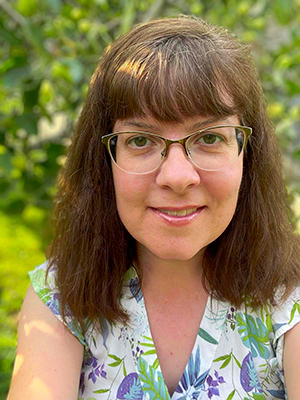
Melanie Faith loves teaching for Women on Writing. Vine Leaves Press has published six of her writing craft books about such
diverse topics as publishing, flash fiction, poetry, photography, teaching online, and writing a research book. Does It Look Like Her? (February 2024) is her most recent narrative poetry collection. She has also written a Regency novella and several other narrative poetry collections. In addition to numerous photography publications, her instructional articles about creative writing techniques have appeared in The Writer and Writers' Journal, among others. To learn more about Melanie’s writing, teaching, editing, and photography, please visit: www.melaniedfaith.com, X/Twitter: @writer_faith, and Instagram: @frompromisingtopublished99.